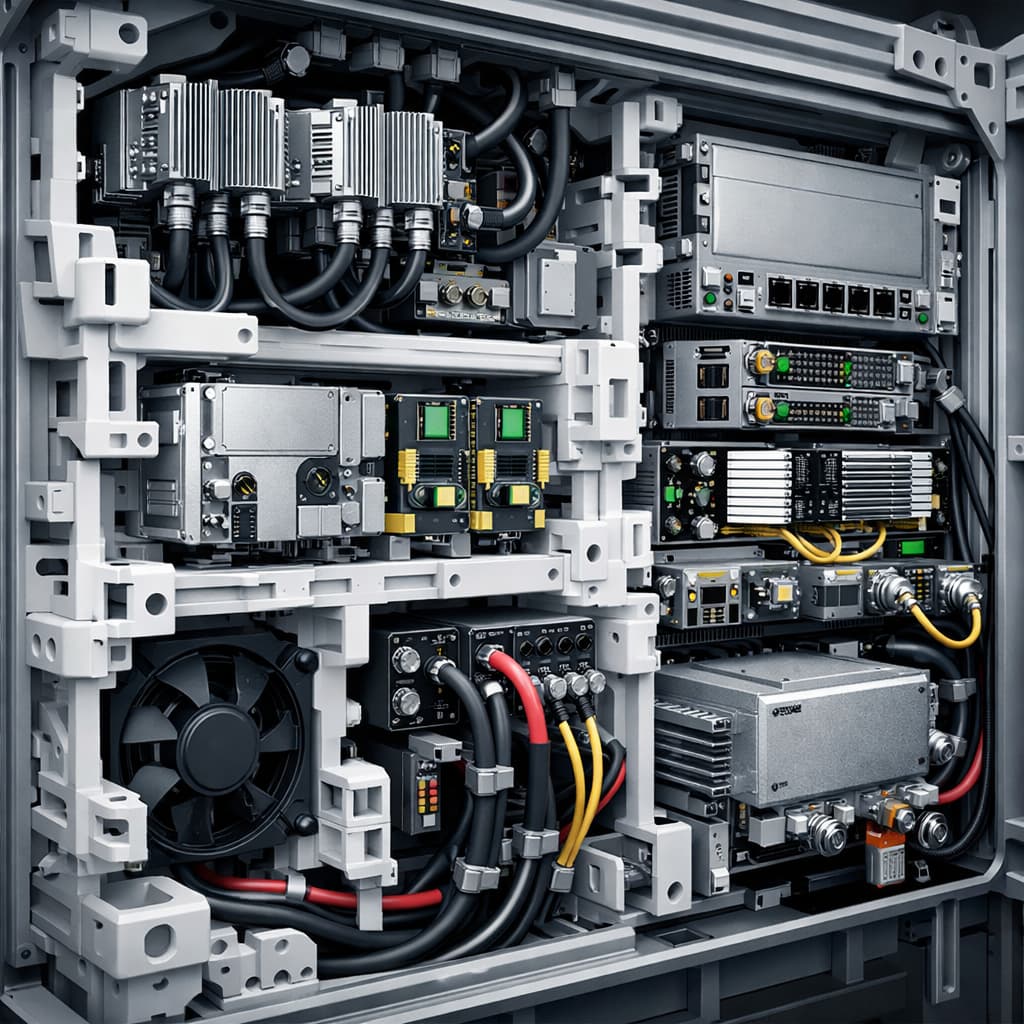

Com a rápida implantação da tecnologia de comunicação 5G, ocorreram mudanças significativas na frequência de operação, densidade de potência e integração estrutural dos equipamentos de comunicação. Comparados às gerações anteriores, os dispositivos 5G precisam suportar taxas de dados mais altas e menor latência, integrando múltiplas antenas, circuitos de alta frequência e sistemas de gerenciamento térmico em espaços cada vez mais compactos. Nessas condições, a estabilidade elétrica dos materiais tornou-se um fator crítico para a confiabilidade geral do sistema, impulsionando um crescente interesse em [tecnologia/tecnologia/tecnologia]. Materiais de nylon de alto CTI.
Em equipamentos de comunicação, o CTI (Índice de Rastreamento Comparativo) é um indicador fundamental usado para avaliar a resistência de materiais isolantes ao rastreamento superficial e à fuga elétrica em condições úmidas ou contaminadas. À medida que a densidade de potência e os gradientes de tensão aumentam nos sistemas 5G, o desempenho insuficiente do isolamento superficial pode levar à formação de arcos elétricos, trilhas de rastreamento carbonizadas e eventual falha elétrica durante a operação a longo prazo. Os materiais de nylon de alto CTI proporcionam margens de segurança aprimoradas por meio de um design molecular e de formulação direcionado.
Do ponto de vista da mecânica dos materiais, náilon de alto CTI Normalmente, esses materiais reduzem a polaridade da superfície, otimizam os sistemas de enchimento e minimizam as impurezas iônicas para suprimir a formação de caminhos condutores. Comparados aos náilons reforçados convencionais, eles mantêm a integridade do isolamento por longos períodos, mesmo sob exposição à umidade e à poluição. Essa característica é particularmente importante para estações base externas, módulos de alimentação e conectores de alta densidade.
Em aplicações de alta frequência, as propriedades dielétricas são igualmente importantes. Os sinais de alta frequência são sensíveis a variações na constante dielétrica e na perda dielétrica, o que Pode resultar em atenuação do sinal, interferência ou distorção de fase. O náilon de alto CTI alcança um comportamento dielétrico estável, otimizando a estrutura da matriz polimérica e a dispersão do material de enchimento, mantendo ao mesmo tempo uma resistência de rastreamento superior, garantindo um desempenho de sinal consistente em antenas, invólucros de módulos de RF e componentes estruturais de precisão.
Do ponto de vista do design, o nylon de alto CTI oferece vantagens adicionais em relação aos materiais metálicos, incluindo excelente isolamento elétrico, peso reduzido e maior flexibilidade de design. Sua estabilidade dimensional e qualidade de superfície em processos de moldagem por injeção permitem geometrias complexas e montagens de alta precisão, minimizando o impacto das variações de fabricação no desempenho elétrico.
A estabilidade térmica é outro fator crítico, já que os equipamentos 5G geralmente operam sob geração contínua de calor. Graças a sistemas de modificação e estabilização resistentes ao calor, o nylon de alto CTI mantém suas propriedades elétricas e dielétricas sob envelhecimento térmico prolongado, tornando-o uma escolha confiável para invólucros de eletrônica de potência e componentes estruturais próximos a fontes de calor.
De modo geral, o náilon de alto índice de temperatura e polarização (CTI) tornou-se uma alternativa cada vez mais importante aos plásticos de engenharia convencionais em equipamentos de comunicação 5G. Seu desempenho equilibrado em resistência ao rastreamento, estabilidade em altas frequências, processabilidade e custo-benefício atende tanto a aplicações de ponta quanto a implantações em larga escala. À medida que a tecnologia 5G continua a evoluir para frequências e níveis de integração mais altos, o náilon de alto CTI desempenhará um papel fundamental para garantir a confiabilidade dos equipamentos a longo prazo.