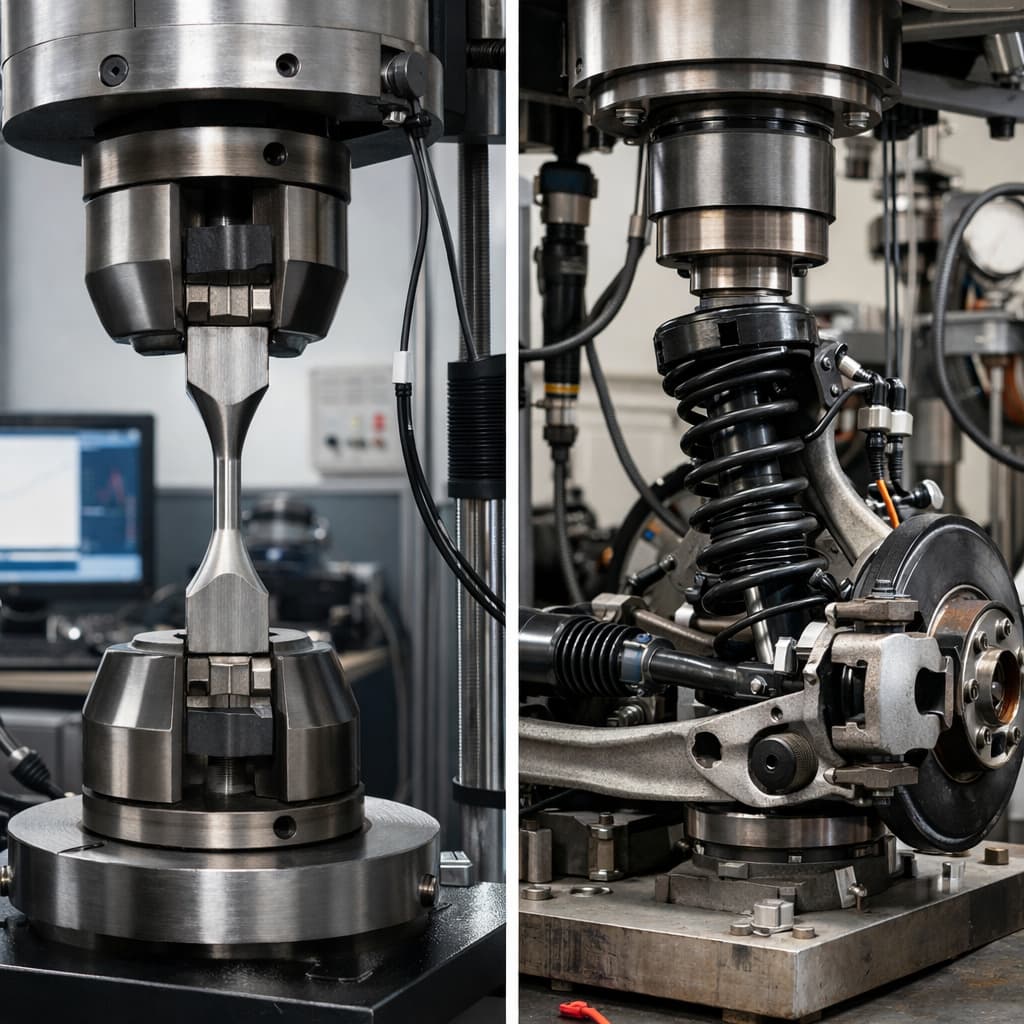

Em plástico de engenharia Na seleção, os dados de teste são frequentemente considerados a base mais objetiva e confiável para a tomada de decisões. No entanto, em projetos reais, retrabalho e falhas em campo causados por “Dados corretos, mas escolha de material incorreta.” estão longe de ser raras. O problema não reside nos testes em si, mas em mal-entendidos sobre as condições de teste, os limites dos dados e a relevância para a engenharia.
Os valores de resistência à tração e à flexão estão entre os dados mais frequentemente mal interpretados. Os testes padrão são realizados em 23°C e 50% de umidade relativa, enquanto os materiais de nylon são altamente sensíveis à temperatura e à umidade. Sob alta umidade ou temperatura elevada, a resistência mecânica pode diminuir em mais de 30%. Muitos casos de falha mostram que o uso de dados de ensaio em condições secas diretamente para cálculos estruturais leva a deformações ou fraturas inesperadas em serviço.
A temperatura de deflexão térmica é outro parâmetro frequentemente tirado de contexto. Os valores de HDT são medidos sob cargas e taxas de aquecimento específicas e destinam-se a fins comparativos. Em aplicações reais, os componentes são normalmente submetidos a cargas estáticas de longa duração ou a tensões cíclicas. Quando operam próximos ao HDT, materiais de nylon Pode ocorrer deformação por fluência significativa, mesmo que a temperatura nunca exceda o valor do teste. Com o tempo, isso pode resultar em instabilidade dimensional e falha funcional.